I chose to write about specializations in social work practice to demonstrate how social work touches on various aspects of life. I believe it is important for students to be aware of what a social worker can do. Also, I will introduce key values and concepts in social work by applying them to movies featured in our Media Services collection. I chose four non-fiction films, two of which are documentaries, and one fictional film.
Girl, Interrupted, 1999 — Mental Health

Girl, Interrupted. Cinematary.com. [October 28, 2026], https://go.iu.edu/nBq9EX.
Girl, Interrupted is a biographical drama film based on Susanna Kaysen’s memoir. Susanna Kaysen, played by Winona Ryder, is an 18 year-old woman in the late 1960s who is sent to a residential psychiatric treatment center after a suicide attempt. During this time institutionalization, the policy response of providing treatment to individuals with mental health illnesses in a psychiatric hospital, was normalized. Today, it is widely known that these residential institutions actually have a negative impact on individuals struggling with their mental health, as they stripped people of their independence and their dignity and worth as human beings.
As an example of the dehumanizing effect institutions had on individuals, Susanna Kaysen and the other women she meets at the psychiatric hospital access their documented files and discover their written diagnoses. After this, Susanna begins to label herself and play into the role of her Borderline Personality Disorder diagnosis. An important social work value is putting the person first, emphasizing their humanity over their mental illness and recognizing that each individual will experience nuanced mental health struggles. Furthermore, people who experience mental illnesses (and people who seek help in general) might have a hard time accepting help when a proper working relationship between the helping professional and the client is not established.
A working relationship refers to building trust and developing purpose and direction for the client-worker relationship. Susanna struggled to trust her nurse, and psychiatrists, which led to her mental health becoming worse. It was only when she opened herself up to the working relationship that she began showing progress. Eventually, her progress results in her being released from the residential institution.
Free Willy, 1993 — Child Welfare

Free Willy. TheGuardian.com. [October 28, 2026], https://go.iu.edu/ddGm6I.
Free Willy is a fictional film, yet it accurately captures key processes in the United States’ child welfare system. The movie follows Jesse, a 12 year-old boy who was abandoned by his mother when he was six. At the start of the film, Jesse is placed in a foster home with the Greenwoods by his Department of Child Services (DCS) social worker, Dwight. Glen and Annie Greenwood are kind and welcoming, but Jesse has a negative attitude about being placed and is abrasive towards his foster parents. Due to a vandalism stunt at the marine park, Jesse is required by his probation officer to clean up the graffiti he drew on an orca tank. While Jesse is at the marine park, he develops a friendship with the orca, named Willy. He is offered a summer job at the park after Willy’s caregiver Randolph and Willy’s trainer and veterinarian Rae realize that Jesse is the only human Willy will respond to.
Jesse’s demeanor and attitude completely change due to his connection with Willy and his enjoyment of helping out at the marine park, he even becomes more open to his foster parents. In social work, there is a theory called the person-in-environment framework that recognizes and views individuals as complexly interacting with their social, physical, and cultural environments. Jesse feels confident, playful, and happy when he works with Willy, which spills over into other aspects of his life as he grows closer to both Annie and Glen. As social workers working with children is a unique experience, but emphasizing recreational activities as a form of fostering passion, commitment, and happiness can go a long way.
Beautiful Boy, 2018 — Substance Use/Addiction
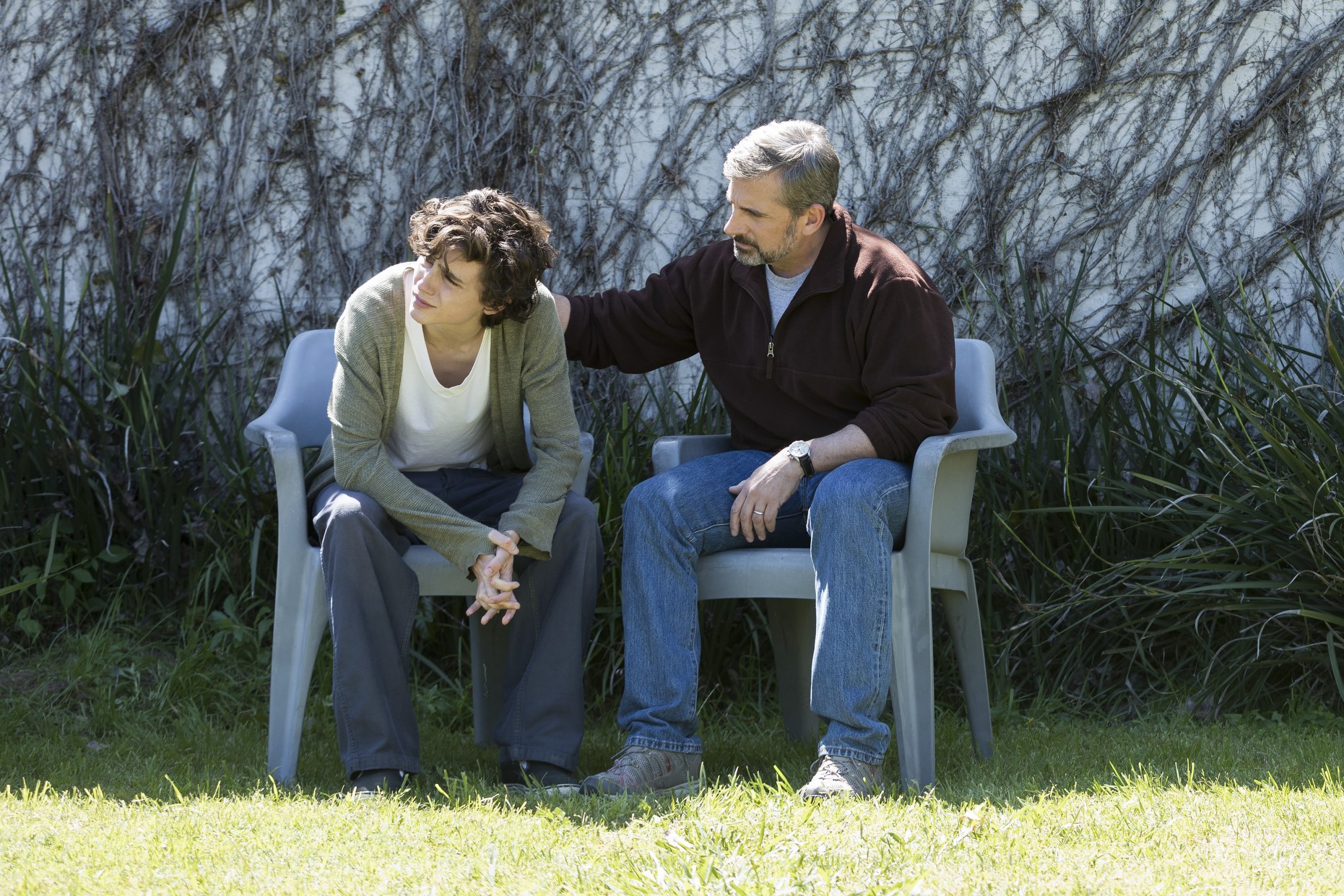
Beautiful Boy. IMDb.com. [October 28, 2026], https://go.iu.edu/wT58c6.
Beautiful Boy is a biographical drama film that follows an 18-year old son, Nic, and his father, David, as Nic navigates treatment for his substance addiction. The first time Nic received treatment was when David brought him to a recovery center. Nic was in denial that he needed professional assistance, yet he carried through with the 28-day treatment program. The facility offered a variety of services/service providers, including psychiatrists, physicians, and group programs such as Alcoholics Anonymous meetings. When helping professionals collaborate across professions to provide various services to an individual, it is referred to as interprofessional collaboration. After Nic’s successful completion of the program, he transitioned into the recovery center’s half-way house where he received less supervision, and thus relapsed and left the center.
Throughout the film, Nic flows through periods of recovery and periods of relapse. Relapse being part of recovery is emphasized in the movie, and is commonly observed in real-life situations of substance addiction. However, after each relapse, David’s capacity to help his son diminishes until Nic begs to come home and restart recovery, but David tells him that’s not going to happen. The film does a good job of showing that rehab programs are not a catch-all for substance addiction, and highlights the need for personalized recovery programs.
Alive Inside, 2014 — Gerontological Services (Aging Adults)

Alive Inside. NYTimes.com. [October 28, 2026], https://go.iu.edu/4XHjcx.
Alive Inside is a documentary that follows a social worker introducing a new intervention for individuals in nursing facilities who have dementia. The people living in the nursing home are described as withdrawn, isolated, and in states of vegetation, which are common experiences of aging adults living with dementia. The new intervention offered by social worker Dan Cohen is playing personalized music to stimulate aging individuals and thus helps them access memories. The intervention is grounded in scientific research showing that music brings engagement, helps jog memories, and reconnects individuals with their identities through stimulating multiple areas of the brain. The film consistently referred to these individuals being “awakened by music.”
Despite the astounding results Cohen got from introducing personalized music from aging adults’ youth to help patients in nursing homes, “personal music” did not count as a medical intervention. As social workers, it is important to influence policy by implementing research-informed practice, yet the process of policy implementation is long and gradual. However, when a clip of an aging adult being awakened by music went viral, a surge of people started volunteering at nursing homes and offering personalized music to patients. Through community advocacy the new intervention gained traction, which shows how important community involvement is when helping people.
The Waiting Room, 2012 — Medical and Hospital Social Work
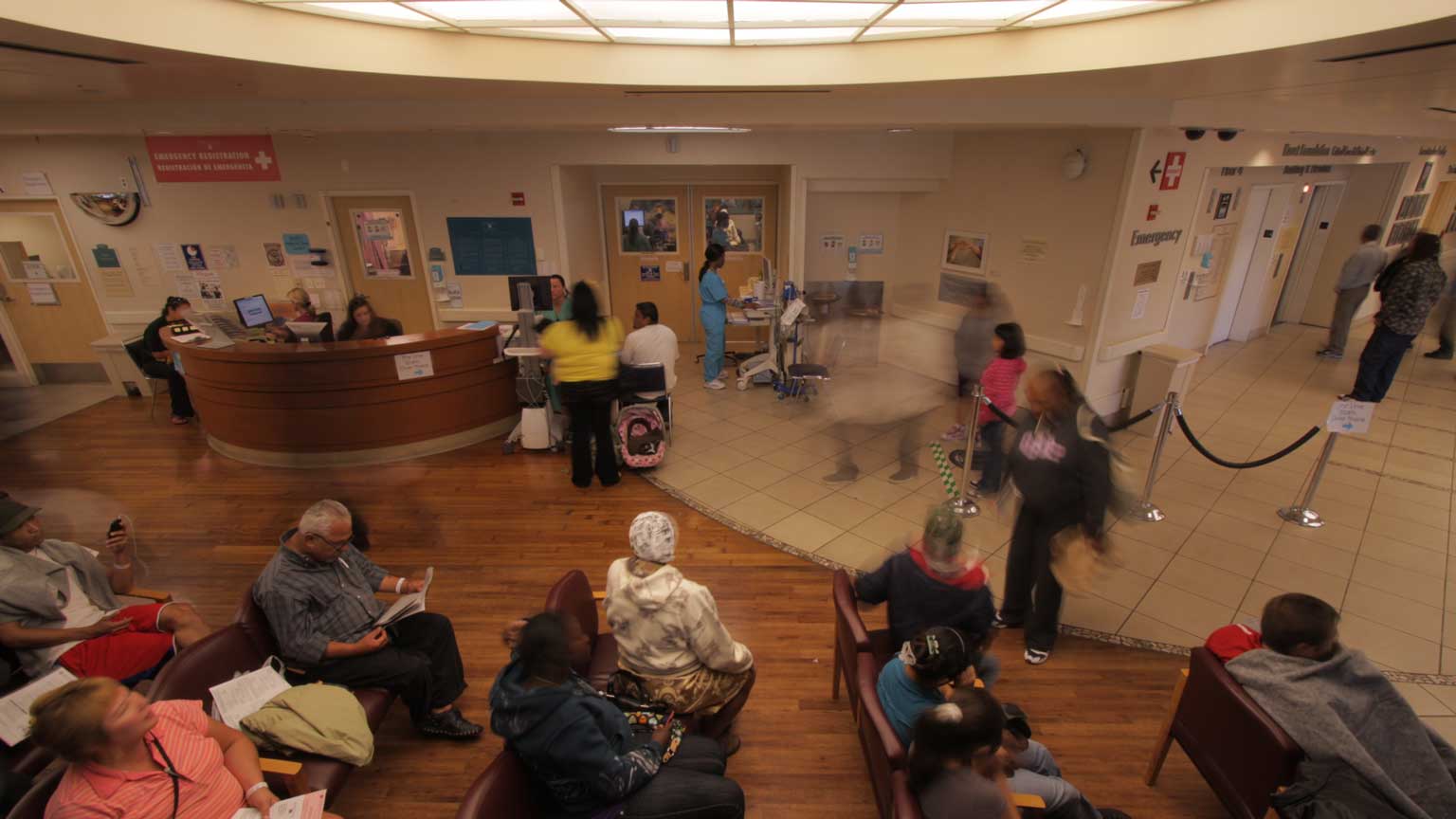
The Waiting Room. PBS.org. [October 28, 2026], https://go.iu.edu/7iP1i5.
The Waiting Room is a documentary that shows what it’s like working in the Emergency Room (ER) department of a hospital, and dealing with both individuals brought in by ambulances and uninsured individuals who seek a variety of services. The film does a great job of showing that waiting for medical services takes a very long time. Some patients spend their entire day in the waiting room. The kinds of care people are seeking include gunshot wounds, chest pain, sore throats, refilling medicine, and seeking help for a canceled testicular tumor surgery.
One nurse tells a patient that they might have to wait for services for a month, to which the patient asks “Even if I’m in extreme pain?” The nurse says yes. The film also shows that a lot of individuals come in with treatable conditions because they don’t have access to a regular doctor. A nurse clarifies that the ER is not meant to address overall health, but due to people slipping through the cracks of the healthcare system the ER is a last resort for many individuals.
Social workers in this setting perform case management and resourcer roles. Case management refers to keeping track of all of a client’s services, resources, and needs to coordinate care. For example, in The Waiting Room a social worker connects with a patient’s rehab center to see if he can go back once he is released from the ER. A resourcer role refers to connecting individuals with programs or services according to their needs. An example of resourcing in The Waiting Room is when hospital social workers are trying to connect uninsured patients with payment programs to alleviate out-of-pocket costs. These roles are important for preventing individuals from slipping through the cracks of the healthcare system and for providing competent care.
Valerie Terew is a senior in her BSW (Social Work) program and minoring in Political Science. This is her fifth semester working at IU’s Media Services. She plans to graduate in May 2027 and then pursue her Masters in Social Work.
Leave a Reply